
Table of Contents
- What Hair Oil Before and After Results Actually Show
- How Long Does It Take for Hair Oil to Work
- How Often to Oil Hair for Visible Changes
- Hair Oil on Hair Extensions: Before and After Expectations
- How to Wash Hair After Oiling Without Damage
- Documenting Your Own Hair Oil Results Safely
- What Hair Oil Cannot Change
- Frequently Asked Questions
Last Updated: October 11, 2026
What Hair Oil Before and After Results Actually Show
Hair oil before and after results reveal real changes in texture, shine, and scalp health, but visible improvements depend heavily on your starting point, hair type, and consistency of use.
Dramatic before-and-after photos typically show improved hydration, better lighting, or results from months of consistent use. Hair oil nourishes the shaft, reduces frizz, adds smoothness, and supports scalp health, but doesn't grow new hair or permanently alter structure.
Honest before-and-after results show incremental changes: softer ends, reduced breakage, healthier scalp, and improved manageability. Documenting across weeks and months matters far more than expecting overnight transformation.
How Long Does It Take for Hair Oil to Work
Initial softness and shine appear within the first application, but meaningful before-and-after changes take four to twelve weeks of consistent use, depending on starting damage level and application frequency.
The first two weeks show quick visible wins: smoother feel and reduced frizz. However, these reflect surface hydration, not deep structural improvement.
Weeks three through eight show real changes: decreased breakage, improved scalp health, thicker appearance from reduced shedding, and consistent shine. By week twelve, expect measurable improvements in hair length retention, reduced split ends, and fuller density.
How Often to Oil Hair for Visible Changes
Once or twice weekly is standard for before-and-after results, but ideal frequency depends on hair type, scalp condition, and whether you're treating natural hair or extensions. One-size-fits-all approaches often lead to under- or over-treatment.
Fine or thin hair: Once weekly is usually sufficient. Apply oil to damp hair before styling, focusing on mid-lengths and ends. If your scalp is oily, avoid applying oil within 5 centimetres of the roots. Monthly before-and-after photos will show whether this frequency delivers visible results; if not, move to twice weekly with less product per application.
Curly or textured hair: Twice weekly is often necessary. Apply oil to soaking-wet hair after shampooing. Oiling before wash day and mid-week as a leave-in on the ends produces dramatic before-and-after improvements in curl definition and frizz reduction.
Dry or damaged hair: Twice weekly accelerates visible changes. Use a pre-wash treatment once weekly (leave in at least thirty minutes or overnight) and apply lightweight finishing oil mid-week to ends. If no improvement after four weeks, increase to three times weekly or switch to a heavier formulation.
Oily or sensitive scalp: Once weekly, applied only to mid-lengths and ends. Use as a finishing treatment on dry hair if prone to irritation. Lighter oils cause less irritation than heavier formulations. Results take longer but consistency matters more than speed.
Hair extensions: Frequency depends on extension type and wear pattern:
- Tape-in or clip-in extensions: Twice weekly, focusing on the mid-lengths and ends. Avoid the attachment points entirely. If extensions feel dry or tangled after one week, increase to three times weekly.
- Sewn-in wefts: Once to twice weekly, depending on how much natural hair is visible at the roots. Avoid oiling directly at the weft line where extensions are attached, as product buildup can weaken the bond.
- Halo extensions: Twice weekly on the hair itself; avoid the band completely. Halo extensions are worn part-time, so you can often reduce frequency to once weekly if extensions are not worn daily.
Consistency matters far more than frequency. Skipping weeks then over-applying won't match steady, moderate use. Set a phone reminder on wash day to stay consistent. Take monthly before-and-after photos in the same lighting to assess whether to adjust frequency.
Dermatology research on scalp health and hair growth cycles
Hair Oil on Hair Extensions: Before and After Expectations
Hair extensions respond differently to oil than natural hair. Premium virgin hair extensions benefit significantly from consistent oiling because they lack natural scalp oils.
The before-and-after timeline for extensions is faster than natural hair. Within two to three weeks of twice-weekly application, extensions feel softer, tangle less, and hold smoothness longer. By week six to eight, extensions maintain lustre, shedding drops, and hair appears fuller and healthier.
Neglected extensions show negative before-and-after changes: they become brittle, mat easily, and shed more within weeks. Consistent oiling is essential maintenance for extensions.
With extensions, you directly control hydration and shine through regular application, making before-and-after improvements more visible and immediate than with natural hair alone.
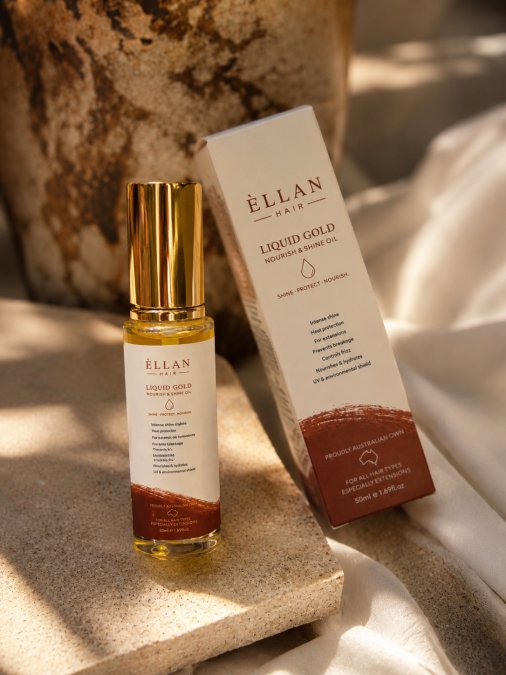
When oiling extensions, apply product to mid-lengths and ends only. Avoid the attachment points (whether tape-in, clip, or weft). Use a lightweight finishing oil like Liquid Gold Nourishing Oil, which provides heat and UV protection without leaving extensions greasy or heavy.

How to Wash Hair After Oiling Without Damage
Proper washing technique after oiling determines whether improvements hold or reverse. Many people undo weeks of progress by shampooing too harshly.
Wait at least thirty minutes before shampooing (or overnight for deeper nourishment). Use sulfate-free shampoo and massage the scalp gently with fingertips. Avoid aggressive rubbing. Rinse with cool or lukewarm water and apply lightweight conditioner to dry ends.
For extensions, use gentle downward strokes and pat dry rather than rubbing. Avoid scrubbing or pulling at attachment points.
The most common mistake is using too much shampoo after oiling. A quarter-sized amount is sufficient; more product strips away progress.
Hair care guidelines from the Australasian Society of Dermatologists
Documenting Your Own Hair Oil Results Safely
To track genuine before-and-after changes, documentation matters. Most people overestimate improvements by not comparing the same conditions or angles.
Take your first photo before starting, using natural light near a window. Photograph from three angles: straight-on (scalp and texture), side profile (thickness), and close-up (ends). Repeat monthly using the same lighting, angles, and styling. Monthly intervals show real changes without discouragement.
Document observations alongside photos: shedding, scalp condition, texture, breakage, and manageability. This written record prevents misremembering as your perception shifts with improvements.
Store photos in a folder labeled with dates. This creates a visual timeline that's far more honest than a single before-and-after comparison. You'll see gradual progression rather than dramatic overnight change, which is actually what real hair health looks like.
What Hair Oil Cannot Change
Before-and-after expectations fail when people expect hair oil to do things it simply cannot do. Being clear about limitations prevents frustration, protects you from misleading marketing claims, and helps you set realistic goals. Understanding the difference between temporary cosmetic improvements and permanent structural changes is essential to interpreting before-and-after photos honestly.
Hair regrowth and hair loss: Hair oil cannot regrow lost hair or reverse male-pattern baldness (androgenetic alopecia). It may support scalp health and reduce shedding by improving blood flow and reducing inflammation, but it does not create new hair follicles or reverse genetic hair loss. If you're experiencing significant hair loss, more than 50-100 strands per day in your brush or shower, consult a healthcare provider or dermatologist before assuming oil will solve it.
Permanent texture or curl pattern change: Hair oil cannot permanently change your hair's texture or curl pattern. It can make curls more defined and bouncy by improving hydration and reducing frizz, and it can make straight hair appear smoother and shinier, but it won't turn straight hair curly or vice versa. Before-and-after photos showing dramatic texture change usually involve different styling methods, heat tools, or fresh chemical treatments (such as perming or relaxing), not the oil itself.
Permanent split-end repair: Hair oil cannot repair split ends permanently. Once a hair shaft splits, the damage is permanent and cannot be reversed by any topical product. Oil can seal the hair cuticle temporarily, making split ends look smoother and feel softer in the short term, but the structural damage remains. Before-and-after photos showing fewer split ends reflect either fresh trims or prevention of new damage, not repair of existing splits.
Hair colour change: Hair oil cannot lighten or darken your hair colour or change pigment. It may make colour appear richer, more vibrant, or deeper by improving shine and light reflection, but it does not alter the actual melanin in the hair shaft. Before-and-after photos showing colour change involve different lighting conditions, fresh colour treatment, or styling that affects how light hits the hair, not the oil.
Prevention of all breakage: Hair oil reduces breakage by improving hydration and strength, but it cannot prevent all breakage. Very fragile, over-processed, or severely damaged hair may still break even with consistent oiling. Protective styling (avoiding tight ponytails, using silk pillowcases, minimising heat styling), heat damage prevention, and regular trims matter as much as oiling. Before-and-after improvements in breakage are real and measurable, but they're part of a complete hair care routine, not a standalone solution.
Scalp conditions requiring medical treatment: Hair oil cannot treat clinical scalp conditions such as seborrhoeic dermatitis, psoriasis, or fungal infections. While oil may temporarily soothe dryness or irritation, it will not cure these conditions and may actually worsen them by trapping moisture or bacteria on the scalp. If you have persistent scalp itching, flaking, redness, or pain, consult a dermatologist before relying on oil. Before-and-after photos from people with these conditions may show temporary cosmetic improvement, but they don't reflect actual treatment.
Permanent hydration without ongoing use: Hair oil cannot permanently hydrate hair. Once you stop applying oil, the temporary hydration benefit fades within days to weeks. This is not a failure of the product; it's the nature of topical treatments. Hair doesn't absorb and retain oil the way skin does. Before-and-after photos showing glossy, soft hair reflect consistent ongoing use, not a permanent change. If you stop oiling, your hair will gradually return to its baseline condition.
Understanding these limits means your before-and-after results will match reality. You'll see genuine improvements in shine, softness, manageability, reduced shedding, and scalp health. You won't see new hair growth, permanent texture change, or cure of medical scalp conditions. That's the honest before-and-after story, and it's still a valuable one.
Frequently Asked Questions
How long does it take to see results from hair oil?
Most users notice softness and shine within 1-2 applications, but meaningful changes in hair thickness, density, and reduced breakage typically take 4-12 weeks of consistent use. Length retention and visible thickening require at least 2-3 months. Results depend on your starting hair condition, scalp health, and application frequency. Dry, damaged, or colour-treated hair often shows improvement faster than healthy hair.
How often should you oil your hair to see results?
Apply hair oil 2-3 times per week as a pre-wash treatment or finishing oil for consistent results. Some users with very dry scalps or extensions benefit from twice-daily application (once before styling, once as a finishing touch). Consistency matters more than frequency; sporadic use won't produce measurable changes. Track your routine for at least 4 weeks before adjusting.
Can you use hair oil on hair extensions?
Yes, but with care. Apply oil to mid-lengths and ends only, avoiding the bonds or attachment points. Use lightweight oils like Liquid Gold Nourishing Oil, which won't weigh down or damage extension hair. Avoid heavy silicone-based oils that can cause matting. Oil helps extensions retain moisture, reduce breakage, and maintain softness, but excessive application or poor washing technique can shorten their lifespan.
What visible changes can you expect before and after using hair oil?
Expect improved softness and shine within days. After 2-4 weeks, hair breakage typically decreases and ends feel smoother. At 6-12 weeks, hair density may appear fuller, length retention improves, and frizz reduces. Scalp health and hydration improve gradually. Hair oil cannot change your natural hair colour, texture pattern, or regrow lost hair, but it does make existing hair look and feel healthier.